Use this checklist before you spend more on ads or new content. Work through it in order, fix the blocking issues first, and record what you changed so the next audit can show real progress. It is written for D2C stores in India, where most shoppers arrive on a phone and decide quickly.
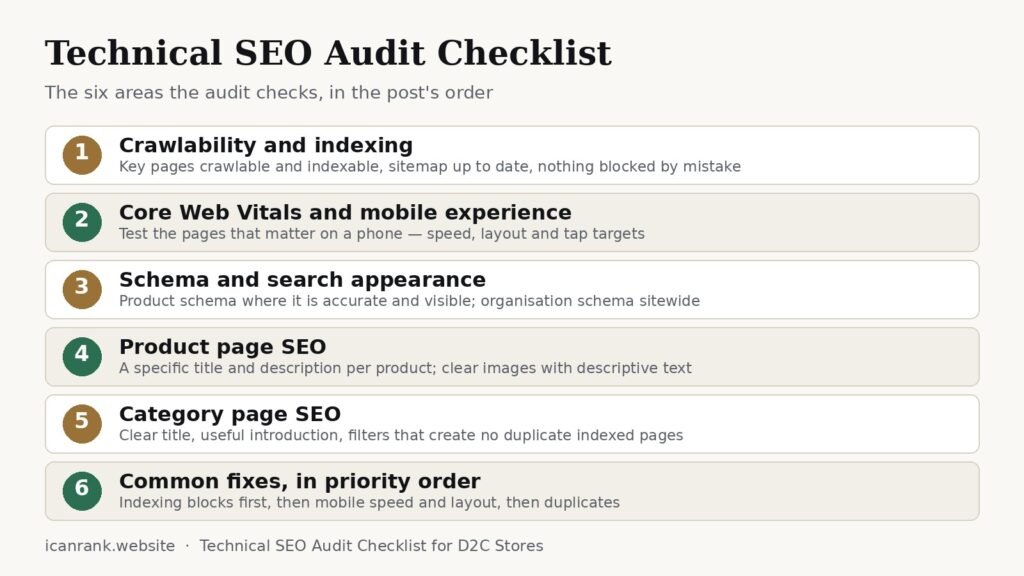
1. Crawlability and indexing
- Confirm that product, category and key content pages are crawlable and indexable, and that no important page is blocked by robots.txt or a noindex tag by mistake.
- Check that the sitemap is up to date, that it lists only pages you want indexed, and that it does not include draft, search or filter pages.
- Fix broken internal links, redirect chains and 404 pages that shoppers and search engines still reach.
- Make sure every important page is reachable within a few clicks from the homepage, and that faceted or filtered URLs do not create large numbers of near-duplicate pages.
2. Core Web Vitals and mobile experience
- Test the homepage, top category pages and top product pages on a phone, not only on a desktop. Check for horizontal scrolling, overlapping text and buttons that are too small or too close together.
- Improve Largest Contentful Paint by reducing oversized images, removing unnecessary scripts, and making sure the hero image is not delayed by lazy loading.
- Reduce layout shift by giving images clear dimensions and avoiding content that jumps as the page loads.
- Check checkout, add-to-cart and contact actions on mobile, since a slow or awkward step there loses sales even when rankings improve.
3. Schema and search appearance
- Use product schema on product pages only where the information is accurate and visible on the page, including price and availability where applicable.
- Use organisation schema on the site as a whole, and article schema on guides, so search engines can understand who publishes the content.
- Check that titles and descriptions are unique, that each page has one clear main heading, and that titles describe the page rather than repeating the site name alone.
- Fix schema errors and missing required fields, and remove markup for content that is not on the page.
4. Product page SEO
- Write a specific title and description for each main product, focused on the product and the problem it solves, rather than copying the same text across products.
- Use clear product images with descriptive file names and alt text, and show size, material, usage and care information where shoppers need it.
- Add helpful supporting content on the page, such as how to use the product, what is included, and answers to common questions.
- Link each product to its category, to related products, and to a relevant guide where it helps the shopper decide.
For the product-level data and copy work behind these checks, follow our product page SEO guide for D2C brands step by step.
5. Category page SEO
- Give each main category a clear title, a useful introduction, and a logical set of filters that do not create duplicate indexed pages.
- Make sure category pages load quickly, show products clearly on mobile, and do not rely only on images or scripts for product names and links.
- Link categories to buying guides and to their best-selling or most relevant products, and keep the category structure simple enough for a new visitor to follow.
6. Common fixes, in priority order
- Fix indexing blocks and broken pages first, because they stop everything else from working.
- Fix mobile speed and layout problems next, especially on the pages that already receive traffic.
- Fix duplicate titles, thin pages and weak internal links before creating a large amount of new content.
- Only then expand content, visual search and link building, using the same topics across Google, Pinterest and YouTube where it makes sense.
After the audit, re-check the fixed pages, note the date of each change, and track rankings, organic sessions and enquiries over the following weeks. If you would like an experienced review of your store, explore the D2C SEO services from icanrank.website, or contact me in Kolkata, India to discuss a technical audit for your D2C store.